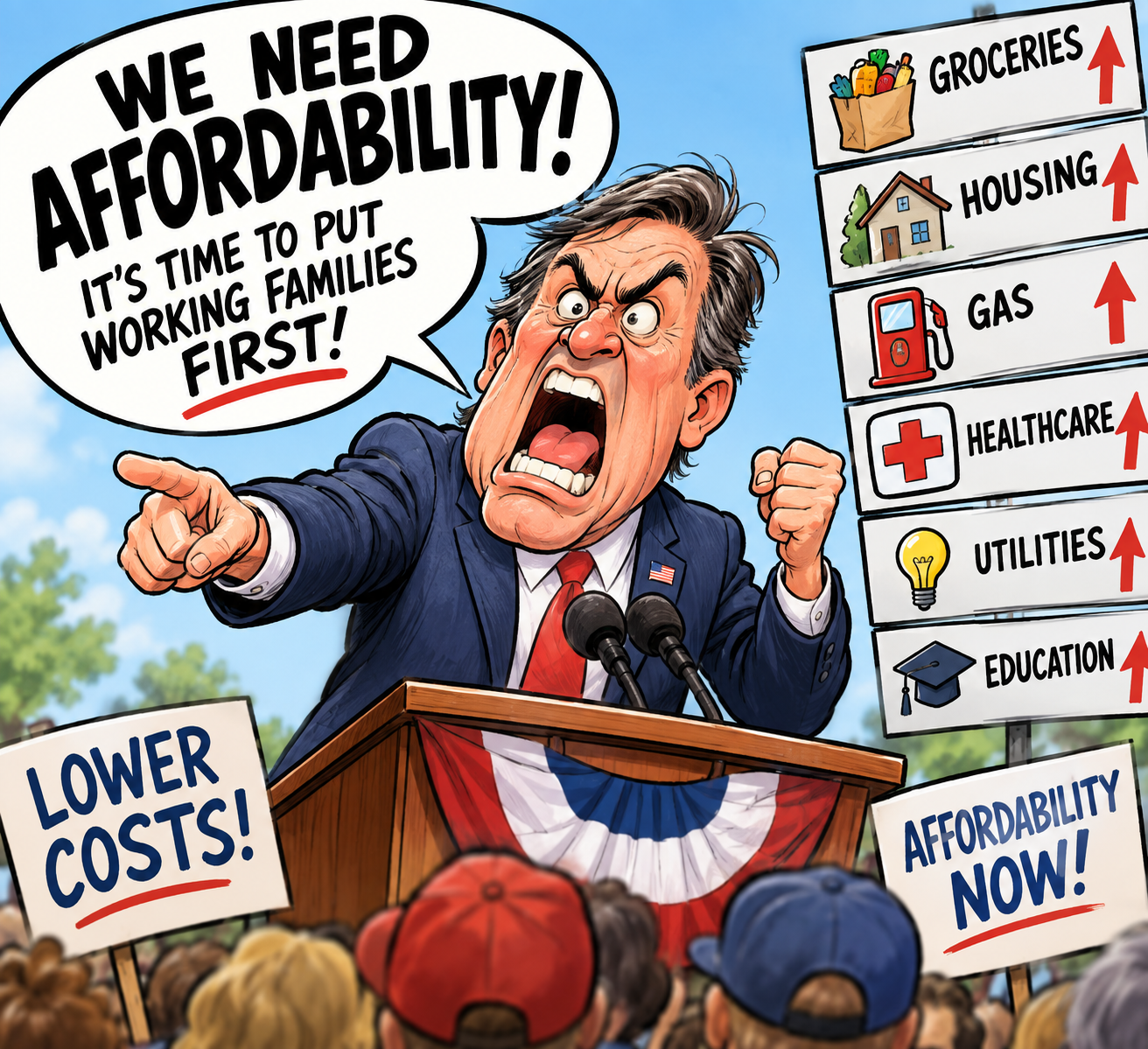
A lot of politicians today mention affordability as their main campaign issue. And making ends meet does seem increasingly more difficult, at least that is what the main stream media reports. However, when you look under the hood a little, spending on the “basics” accounts, and has consistently accounted, for a smaller share of income.
Since WWII, spending on food, clothing, housing, utilities, and household maintenance has steadily declined from 53% of disposable personal income in the late 1940s to 32% in 2024 (Source: Human Progress). Do we, as a society, just expect more today than our forefathers did? I remember not having air-conditioning or TV in my house growing up. But, back then, everyone was in the same boat. Have we all just grown so accustomed to the luxuries of life that they’re now essential to our existence?
Groceries have increased in price faster than the inflation rate lately, and most complaints have centered around the price of food. But, according to the USDA Economic Research Service, Americans spend 3.2% LESS of their income on food than they did 50 years ago. In 1976 the average family of four spent 13.6% of their incomes on food. Of that it was 9.4% for groceries and 4.2% eating out. Today, those figures are 10.4%, 4.9% and 5.5% respectively. And notice the difference in where we buy our food. 50 years ago we spent twice as much on groceries as we did in restaurants. Today we spend more at restaurants.
I know that we do still have a hunger problem in America among some people. However, Americans by-and-large are a generous people and we don’t let our poor go hungry if we are aware of the specific need. So, while we know our politicians will try to exploit issues for their own benefit, it’s always good to actually know the facts